

Simcenter Micred Power Tester
Accelerated Reliability Testing — Predict Thermal Lifetime Before Field Failures
Evaluate power-semiconductor degradation and lifetime under repeated operating stress using automated, non-destructive power cycling.
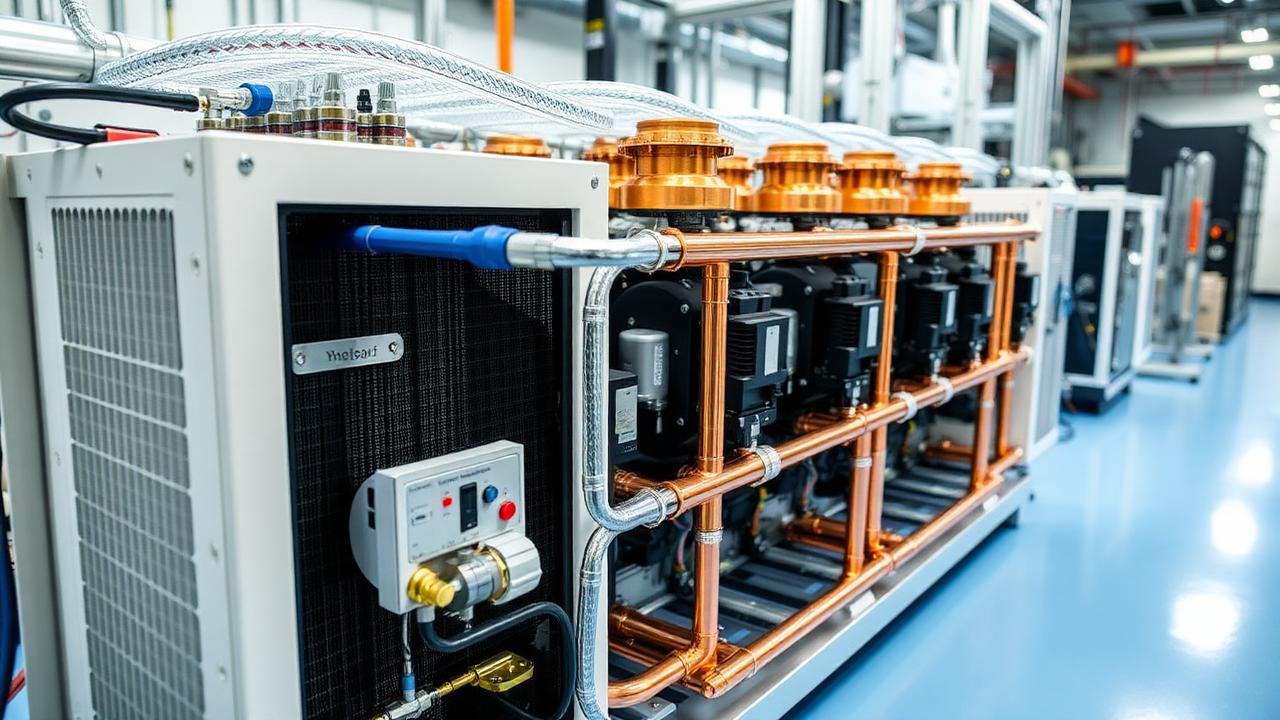
What It Is
Simcenter Micred Power Tester combines accelerated power cycling with real-time thermal monitoring to help engineering teams understand degradation, identify failure mechanisms, and improve device reliability.
Core Capabilities
Core capabilities
- Programmable current, voltage and timing profiles
- ΔTj-controlled cycling for constant thermal stress
- in-situ thermal transient measurement after each cycle or at defined intervals
- real-time layer-by-layer structure-function degradation monitoring
- automatic failure-precursor detection before catastrophic failure
- solder-joint fatigue, die-attach degradation and wire-bond lift-off characterization
- TIM degradation tracking over thousands of cycles
- multi-channel parallel testing to 128+ channels
- programmable active air or liquid cooling for precise ΔTj control
- Weibull statistical analysis
- Coffin-Manson and Norris-Landzberg lifetime extrapolation
- exportable degradation data for simulation model calibration
Best For
- IGBTs
- MOSFETs
- Power modules
- Automotive power electronics
- Traction inverters
- Industrial drives
- Renewable-energy power electronics
- High-power semiconductor qualification
Six-stage workflow position
Physical reliability-validation layer for power devices from Chiplet/Die through System.
Why engineering teams choose Power Tester.
Representative engineering situations these tools are asked to resolve.
- 01
A Tier-1 rejects an automotive SiC module because the supplier's AQG 324 v04.1 evidence is end-of-test only — 30,000 cycles with a pass/fail at the end and no visibility into when degradation started. Power Tester cycles at a controlled ΔTj of 100 K and measures Rth after every block, so the 15% thermal-impedance drift that precedes bond-wire lift-off shows up at cycle 18,000 instead of at teardown.
- 02
An IGBT stack in a wind-converter fleet fails intermittently after roughly 40,000 field cycles with no reproducible failure mode. Power Tester replays the measured mission profile in the lab and correlates a 0.08 K/W rise in junction-to-case resistance with progressive solder-joint fatigue — separating solder degradation from die-attach for the first time in that programme.
- 03
A traction-inverter supplier must defend a 15-year, 300,000-cycle lifetime claim to a customer reliability board. Power Tester runs accelerated ΔTj = 80 K and 110 K legs, and Coffin-Manson / Norris-Landzberg extrapolation from the two measured Weibull curves converts the accelerated result into a field-lifetime number the board can audit.
- AQG 324 (automotive power module power cycling)
- AEC-Q101 (discrete)
- AEC-Q104 (multichip modules)
- JEDEC JESD22-A122 (power & temperature cycling)
- JESD22-A104 (temperature cycling)
- IEC 60749
- MIL-STD-883
- Power-electronics engineer
- Reliability engineer
- Qualification engineer
“Monitoring thermal resistance throughout power cycling, rather than only at end of life, has changed how early we can detect degradation trends.”
Customer statement published by Siemens. Not an Electro Source engagement.
How this reaches your team.
Delivered by Electro Source with automated cycling profile setup, in-situ thermal instrumentation and operator training. In-house accelerated power cycling to 1,800 W is available as a ROIfast™ contract service in our North American laboratory.
Discuss Your Power-Cycling Requirements
Tell us what devices you plan to cycle, what stress profile applies, and what reliability decisions the results need to support.